Circulating Tumor Cell (CTC) Blood Test
What is CTC Blood Test?
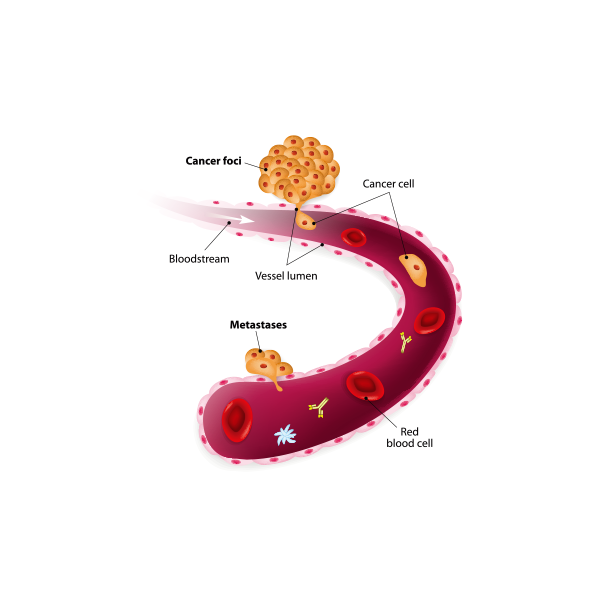
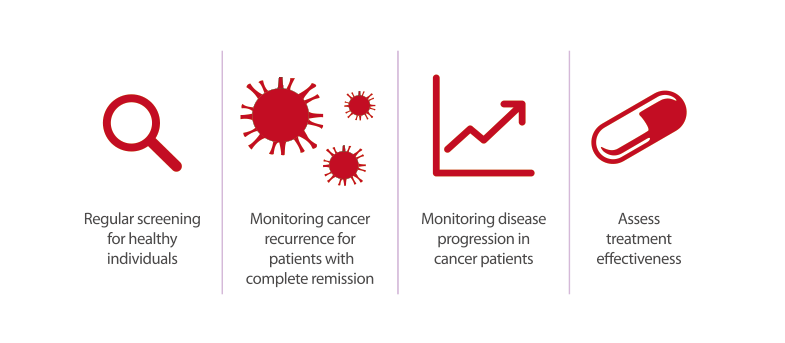
Circulating Tumor Cell (CTC) Blood Test is an advanced and non-invasive laboratory test for early cancer detection and screening, it might indicate signs of cancer development and tumor metastasis. It can be used for regular screening is\n healthy individuals and patients with a higher risk profile.
Early cancer detection is key in healthcare. For example, the five-year survival rates for breast and prostate cancer patients with early stage can be over 95%1,2. For nearly all types of cancer, the 5-year relative survival is substantially lower if disease is found at an advanced stage3. Hence, early detection of cancer with CTC technology can help result in a higher survival rate.
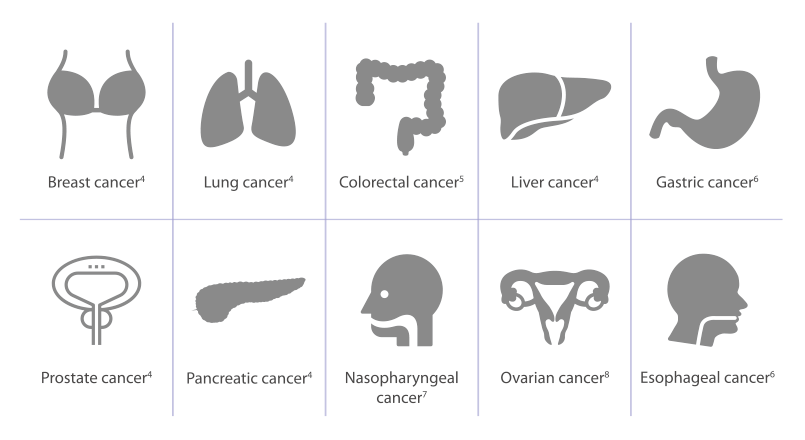
Cancers Detected by CTC
CTC Blood Test can detect 10 different types of cancer, including
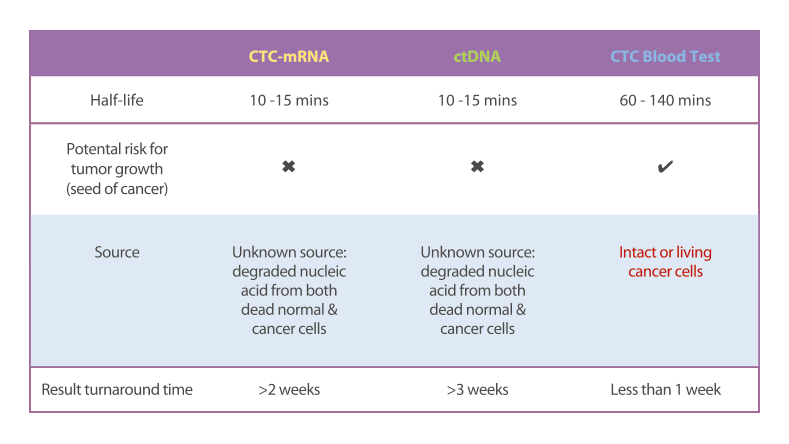
Superior to Other Liquid Biopsy Tests
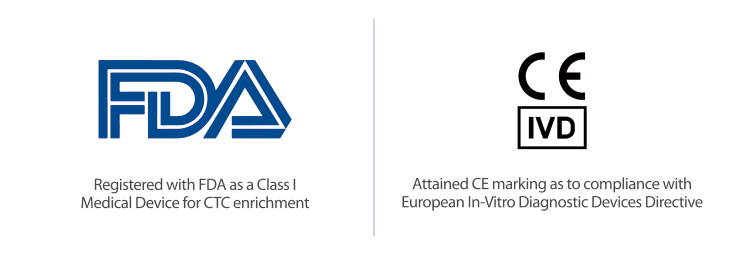
Recognized by the Major Authorities
Higher Efficacy Tumor Biomarker for Disease Progression
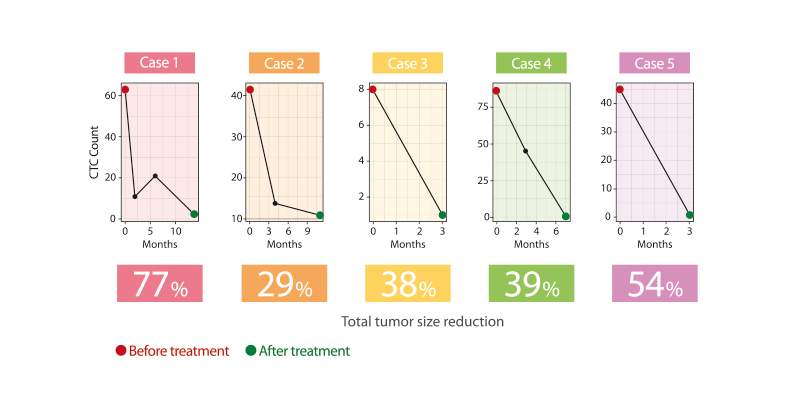
Clinically, the amount of CTC decreases with tumor shrinkage.
CTC test can reflect the treatment efficacy in 80% of patients – 4X higher than serum tumor biomarkers8.
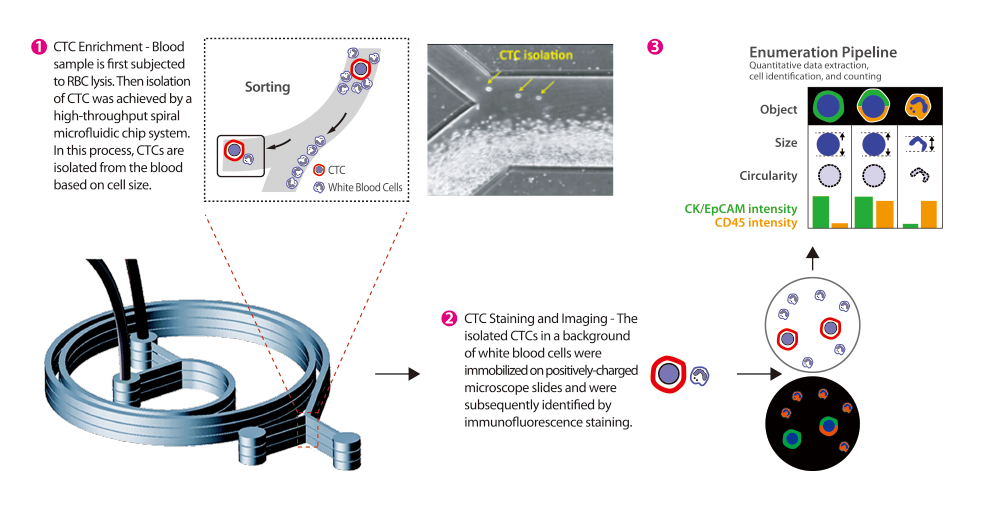
CTC Technology
Consists of 1) CTC Enrichment, 2) CTC Staining and Imaging and 3) CTC Enumeration9
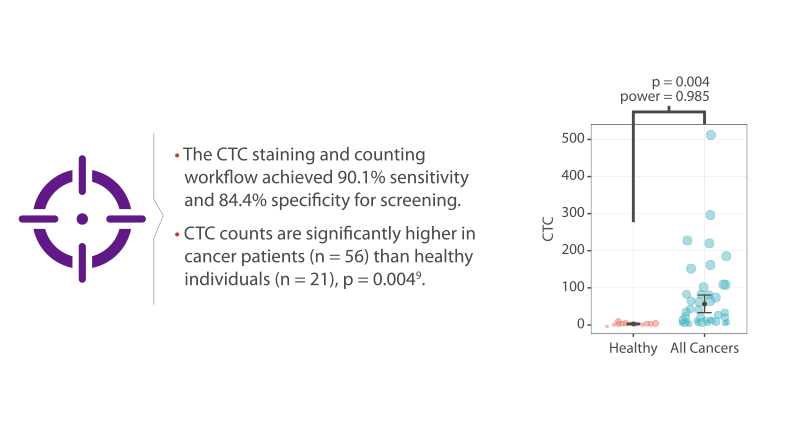
High Sensitivity and Specificity
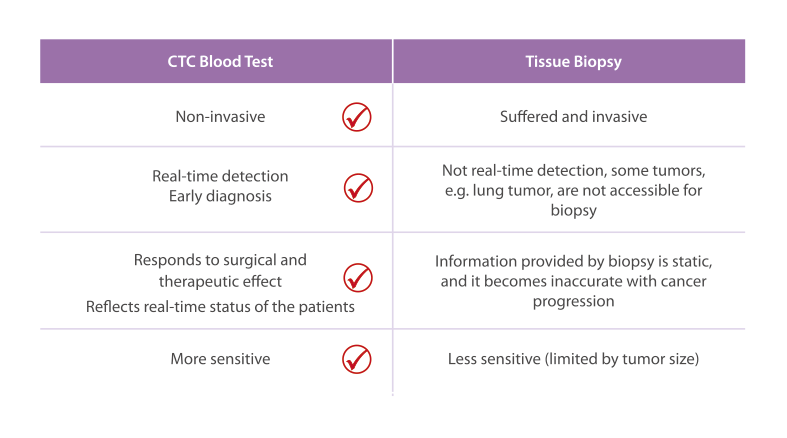
Superior to Tissue Biopsy10
Recommendation
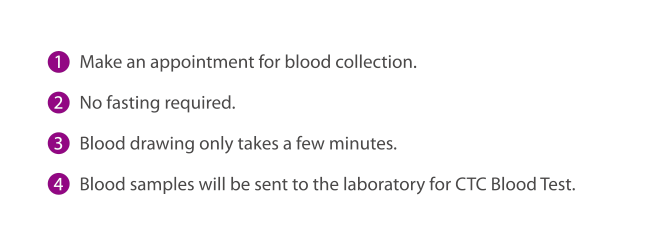
Easy Ordering
ctDNA=circulating tumor deoxyribonucleic acid. FDA=Food and Drug Administration. mRNA=messenger ribonucleic acid.
References: 1. Breast Cancer Survival Rates. Available at https://www.cancer.org/cancer/breast-cancer/understanding-a-breast-cancer-diagnosis/breast-cancer-survival-rates.html. Accessed: 7 Jan 2019. 2. Survival Rates for Prostate Cancer. Available at https://www.cancer.org/cancer/prostate-cancer/detection-diagnosis-staging/survival-rates.html. Accessed: 7 Jan 2019. 3. Cancer Stat Facts. Available at https://seer.cancer.gov/statfacts/. Accessed: 7 Jan 2019. 4. Liu H, Zhang X, Li J, et al. J Cancer Res Clin Oncol. 2015;141:189-201. 5. Eliasova P, Pinkas M, Kolostova K, et al. Folia Histochem Cytobiol. 2017;55:1-5. 6. Li Y, Ma G, Zhao P, et al. Clin Chim Acta. 2018;485:95-102. 7. He C, Huang X, Su X, et al. Cancer Biol Ther. 2017;18:888–894. 8. Lee VH, Wong VCL, Lam CT, et al. Int J Radiat Oncol Biol Phys. 2017;99:E165(2396). 9. Wong VC, Ko JM, Lam CT, et al. PLoS One. 2017;12:e0177276. 10. Wang J, Chang S, Li G, et al. Front Med. 2017;11:522-527.